
As an American who’s been to Haiti a handful of times, I’ve often been asked by those who haven’t been there some variation of the question: “why is Haiti so poor?” But from Americans who have traveled there, I’ve often been on the receiving end of a comment: Haiti is a land of contrasts.
 Slavery and freedom. Very rich and very poor. Very light- or very dark-skinned. French; African. So close to the U.S., but so very different. So much despair, but so much pride. Squalor, beauty. Corruption; hope. Disaster; resiliency. History; promise.
I recently took my fifth trip to Haiti since I first travelled there in May of 2009 to meet the infant who, through adoption, became my son. On this trip, thanks to Jamie, HFF staff, and the many families that welcomed me into their homes, I had the opportunity to see more of the contrasts embedded in Haitian life–and to see something beyond them.
Take, for example, the two kinds of homes in which most of HFF’s families live. Many families reside in the kind of huts that have dotted Haiti’s landscape since before earthquake. Made of cinderblocks, usually with no electricity, no doors or windows, no bathroom, and no furniture except, perhaps, an old table and a cot or two, these small dwellings are often shared by many family members.
But we’ve heard so much more about tents since January 2010. I visited one HFF family that lives in a tent city and, oddly enough, though the walls were made of tarp rather than cinderblock, the tent was much hotter than the huts I visited. There were the same odds and ends lovingly cared for that I saw in many of the huts I had visited, and the same kind of old, wooden chair was brought out from its hiding place for me as a guest. The same graciousness and the same pride. But there wasn’t as much a sense that life went on outside that I saw in the huts. Tent cities are sprawling, crowded places where neighbors are friendly but tentative and families come and go. Huts are built in clusters that bring together a handful of families that are mutually dependent.
 Thanks in part to HFF’s help, the family I visited in the tent will soon own the land on which their temporary home now stands, and they’ll be able to work toward building a more permanent structure, which will probably be made of cinderblocks. Hopefully, some of their neighbors will be lucky enough to do the same. That visit reminded me how hard Haitians try to hold on to or rebuild their communities and families, and how important HFF’s work in helping them to do so is.
–Jean Griffith, Executive Director, Haitian Families First
In celebration of Mother’s Day and in honor of moms everywhere, we’d like to tell you about three very special women whose lives have been touched, in different ways, by Haitian Families First. Each woman, in her own way, has moved us by her display of those qualities we often associate with motherhood: unconditional love, sacrifice, and selflessness. But Diane, Claemane, and Madame Michel inspire us by their demonstration of another quality key to being a great mom: courage. We hope you’ll read a little about these three courageous women and be inspired by them and your own manman!
Diane
 Diane McMutrie always knew she wanted to be a mother, and since becoming one more than thirty years ago, has never wavered in her commitment to helping her four children grow into kind, caring, and strong individuals. The mother of our co-presidents, Jamie and Ali, Diane couldn’t be prouder of her three grown children who, she says, have become all that she expected and more than she could have hoped for. As Jamie, Ali, and their brother have grown into adulthood, Diane has had to do what all great parents do: let go and realize you can’t always fix things for your children. Looking back, she thought her most bittersweet moments would be the milestones in her children’s lives: the first day she sent each of them off to school, the first time she watched her oldest (Jamie) drive the family van by herself.
But Diane has had to do something else many mothers do not: see her daughters move from the comforts of a life in the U.S. to the challenging but rewarding life of serving others in Haiti. Knowing that her daughters are doing the work they were meant to do—she recalls a nine-year old Jamie spending hours helping to care for her infant sister, Ali—Diane has embraced her daughters’ choice to dedicate themselves to Haiti’s poorest children.
And since adopting a little Haitian boy once in her daughters’ care, Diane says she has a new zest for life and a renewed appreciation of what is really important to her.  She’s been inspired by the mothers in Haiti she’s encountered: mothers who parent without any of the comforts she has known and, worse still, mothers who decide not to raise their children in order to give them a better life. Seeing Jamie and Ali prevent that sacrifice—seeing them help mothers to keep their children—is, as she puts it, one of “THE coolest things” about her own life as a mother.
Claemane
One day in February, HFF received a call from a pediatrician about a boy who had been left at a hospital. As often happens when they are asked to consult on such cases, they arrived at the hospital to find the boy severely malnourished and dehydrated, weighing just 11 pounds at over two years of age. And as they always do in these situations, HFF staff set out to try to find the child’s family.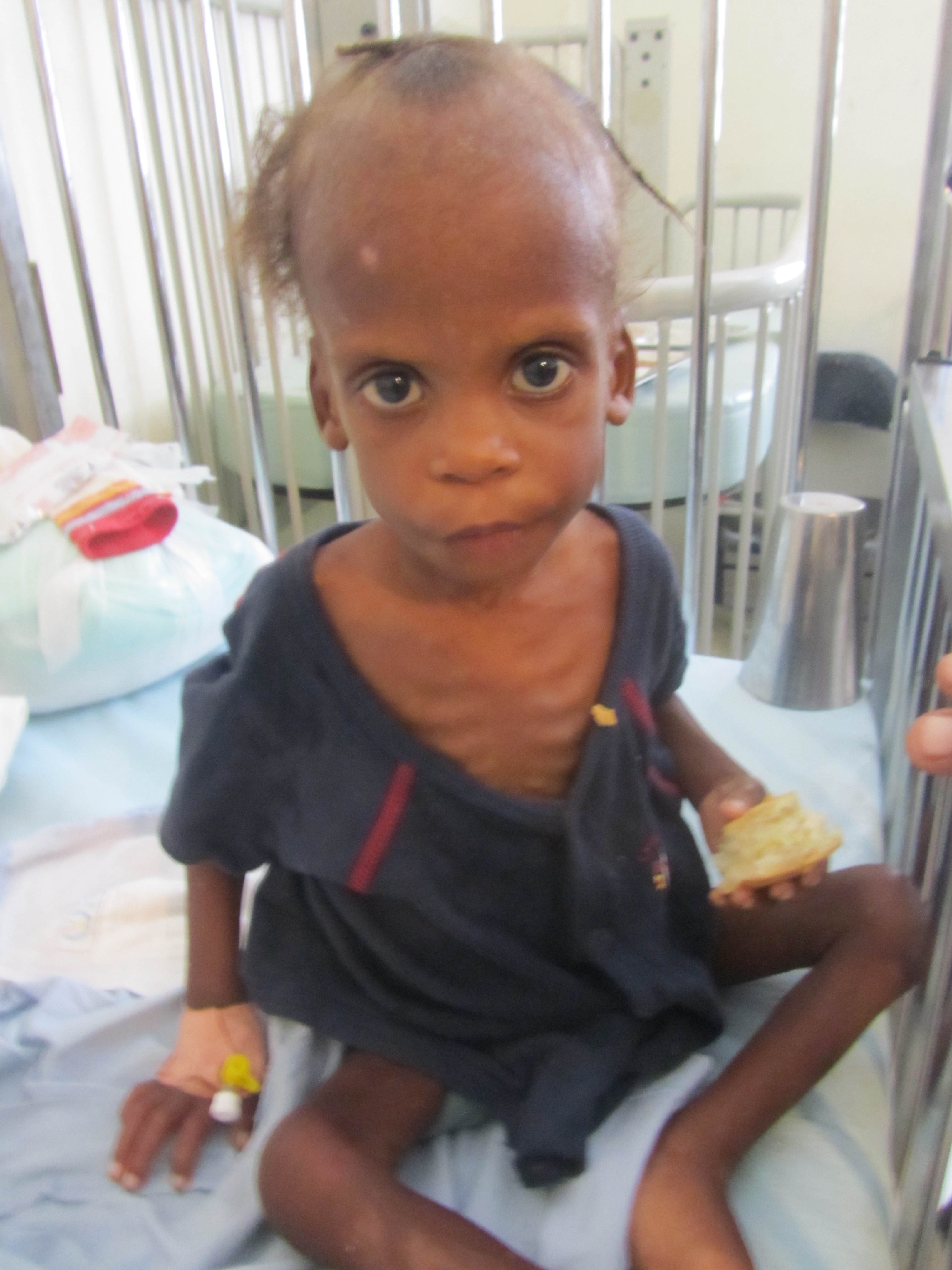
It didn’t take them long. Agonized by her choice, Claemane had abandoned her son, Edanson, after months of searching for help for him for what she believed was an illness. But she couldn’t bring herself to go too far away from the hospital where she’d left him, desperately hoping to hear news that he’d received help. A single mother who, like so many Haitians, cannot find steady employment, Claemane struggled to feed Edanson and his younger sister, Nashka, and when her son went from being a happy toddler to a sick little boy no longer able to walk, she felt she had no option but to rely on the strangers at the hospital for help. She loved Edanson, but she gave him up in the hope of saving him. When HFF staff first met her, Claeamane was overcome by her concerns for her own health and especially that of her children. Her anxiety and her struggle to raise her children were overwhelming her so much that, when she finally did find help through HFF’s “breastfeeding moms” program, she thought it was too good to be true. But the program is teaching her about proper nutrition in addition to providing her and the children with food and vitamins, and Claemane and her children are doing better.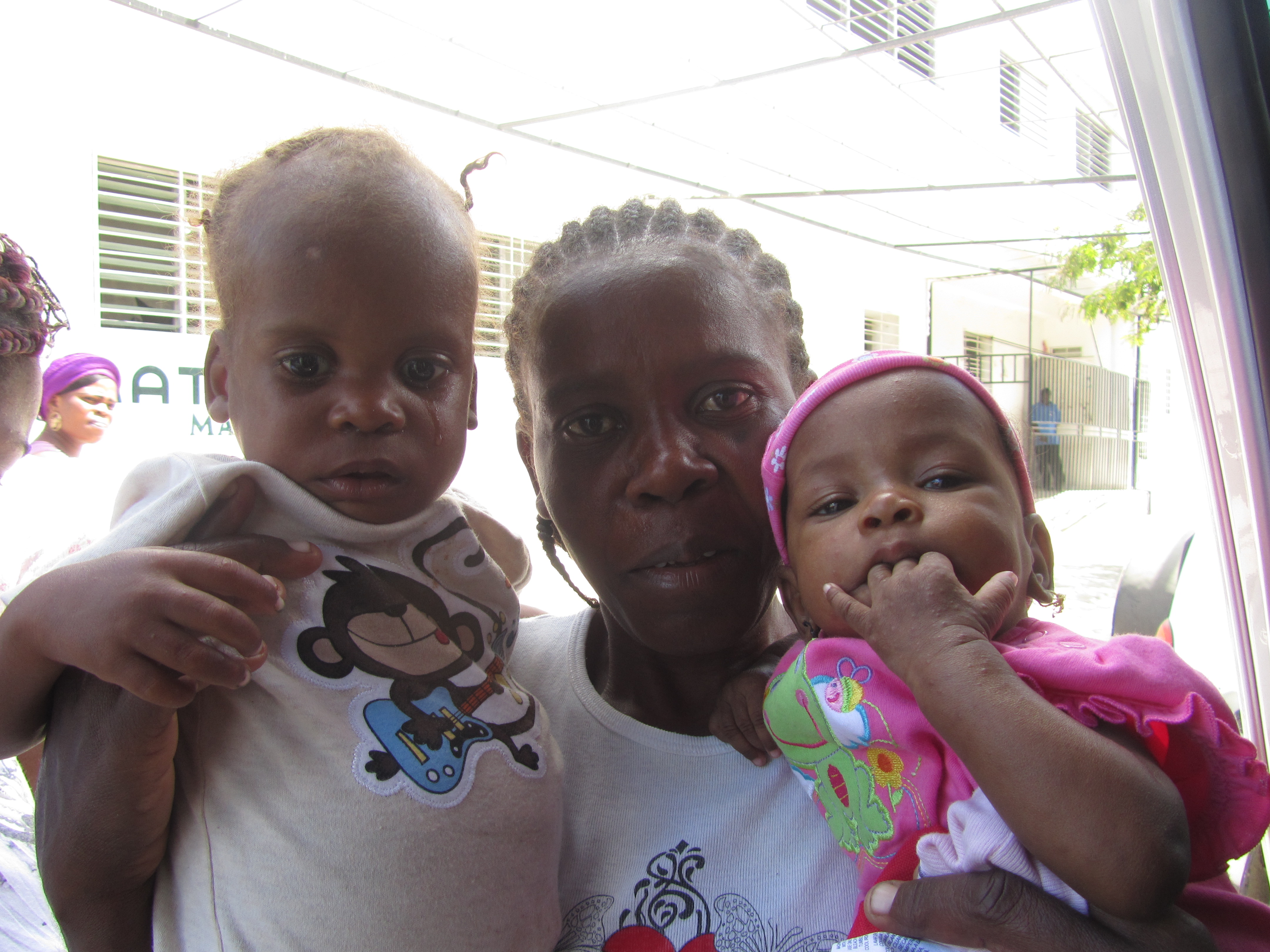
Of course, she is still very poor and will continue to struggle to give her children even the very basic things they need to grow. But for the first time, she is able to take pride in being a mother. And for the first time, she is able to find joy in her children: in watching Edanson take his first wobbly steps since becaming sick; in the sound of Nashka’s laugh when she kisses her daughter’s stomach. These are the kinds of moments we all live for, and thanks to a little help from HFF, Claemane can now experience them.
Madame Michel
Madame Michel faced the thing every parent dreads the most: the death of her child, a daughter, who left behind her own daughter, Sednika. Together with her other daughter, Madame Michel was dedicated to raising Sednika, but, formula being too expensive for many Haitians, she was struggling to keep her properly fed. On the day HFF staff met Madame Michel, she had taken Sednika to the hospital, where someone had advised her to relinquish her granddaughter. She refused, unable to even entertain the notion of a separation from Sednika. “I love her and she loves me,” she responded, “I just need to find out how I can make her better.”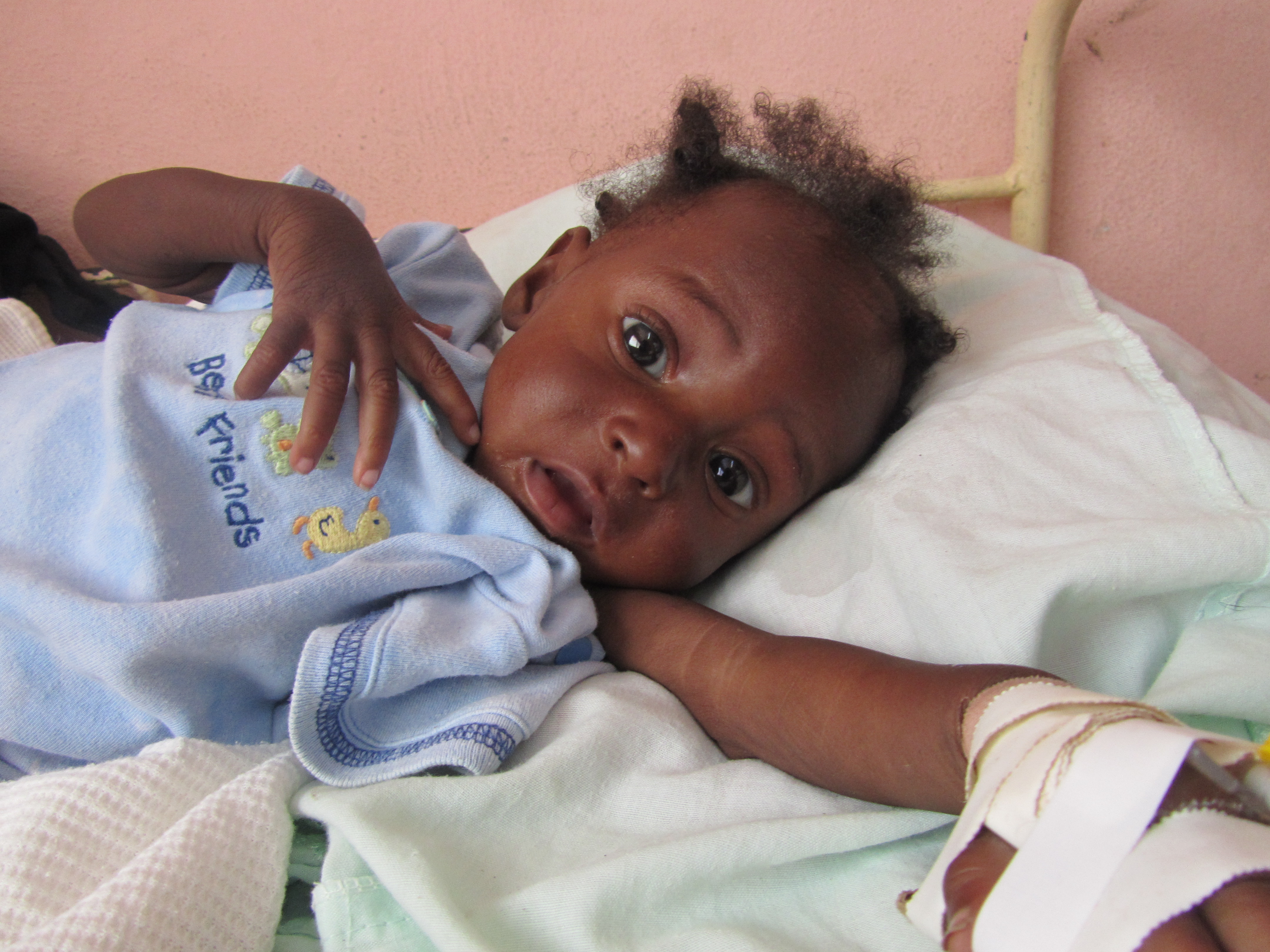
HFF was able to provide Madame Michel with the help she needed, enrolling Sednika in our formula program and giving the same information about proper nutrition and health to her grandmother we give Claemane and so many other mothers. With the help of The Road to Hope, HFF also provided Madame Michel, a farmer, with seeds, which HFF supplemented with fertilizer and farming equipment. She is growing onions, okra, and tomatoes, which she shares with HFF staff and, when she has an especially good yield on a crop, with other mothers in our programs.
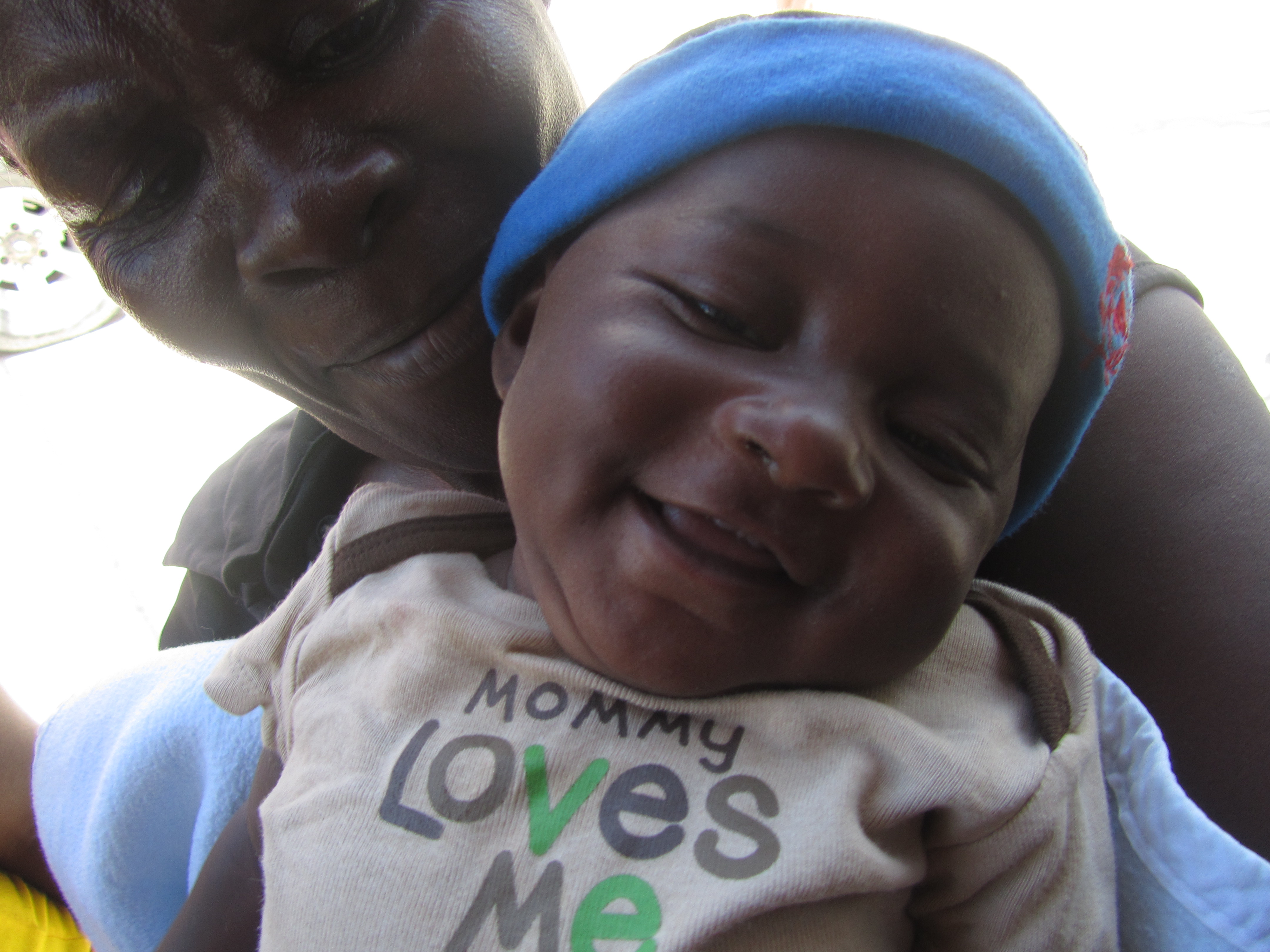 Still small, Sednika is getting stronger and is thriving in the love of her grandmother. Each week when HFF staff visits Sednika with Jamie’s trusty scale, Madame Michel waits anxiously to hear how much her granddaughter weighs, and literally dances for joy when she hears that she’s gained a few ounces. She says that she and Sednika make a great team. We couldn’t agree more.
A few months ago, our founder, Jamie McMutrie, sent me an email request that was uncharacteristically demanding: “I need to talk to you. Now.”
Jamie rarely makes demands, and when she does, she often prefaces them by saying: “I don’t mean to be a pain, but . . .” She’s strong for a variety of reasons, but mostly because she gives a lot of herself and asks so little of us.
So when she asked me to do something—now—I knew well enough to listen. And what I heard was a story, new to HFF, about a 17-month old girl, Ylionise, with a congenital heart condition called VSD that would, in her case, prove deadly. She needed a surgery she couldn’t get in Haiti, which meant she needed a medical visa to leave the country as well as a doctor and a hospital elsewhere willing to donate their services. Jamie had heard from a staff member of a hospital she regularly visits that Ylionise’s mother, Gertha, and her father, Ylionel, already spent their meager savings getting their daughter medical tests. After months of watching their daughter get sicker and sicker, they were getting desperate. The only help that had been offered to them involved relinquishing Ylionise to an orphanage that, after the surgery, would place her for adoption outside of Haiti.
 We wanted to give Ylionise and her family another option. But Jamie and our staff in Haiti knew little about how to obtain a medical visa, and none of us knew to whom we might turn for help with getting the medical staff and resources we would need. We did know that, as a young organization, we couldn’t afford to provide much financial assistance. “Do you think we could do this?” Jamie and I asked one another. That question implied another, more daunting one we didn’t ask out loud: what if we can’t?
But, as it turned out, we could, with a lot of help. One of our board members, Lynn Lebowitz, contacted a friend who’s involved with Patrons of the HeARTs, a Florida-based organization that evaluates and treats children like Ylionise with congenital heart defects. Patrons found an incredibly generous sponsor, K. Fehling & Associates, to fund Ylionise’s medical costs. They also connected us to a Jacksonville-area family, the Gabets, who opened their home and their hearts to Ylionise and Gertha while they are in the United States. In Pittsburgh, Team Tassy helped with the visa process. Haitians, most especially Claude Raymond, Director of Immigration, were as eager as Americans to help the family, and together with U.S. embassy officials, they made it possible for mother and daughter to travel to the U.S.
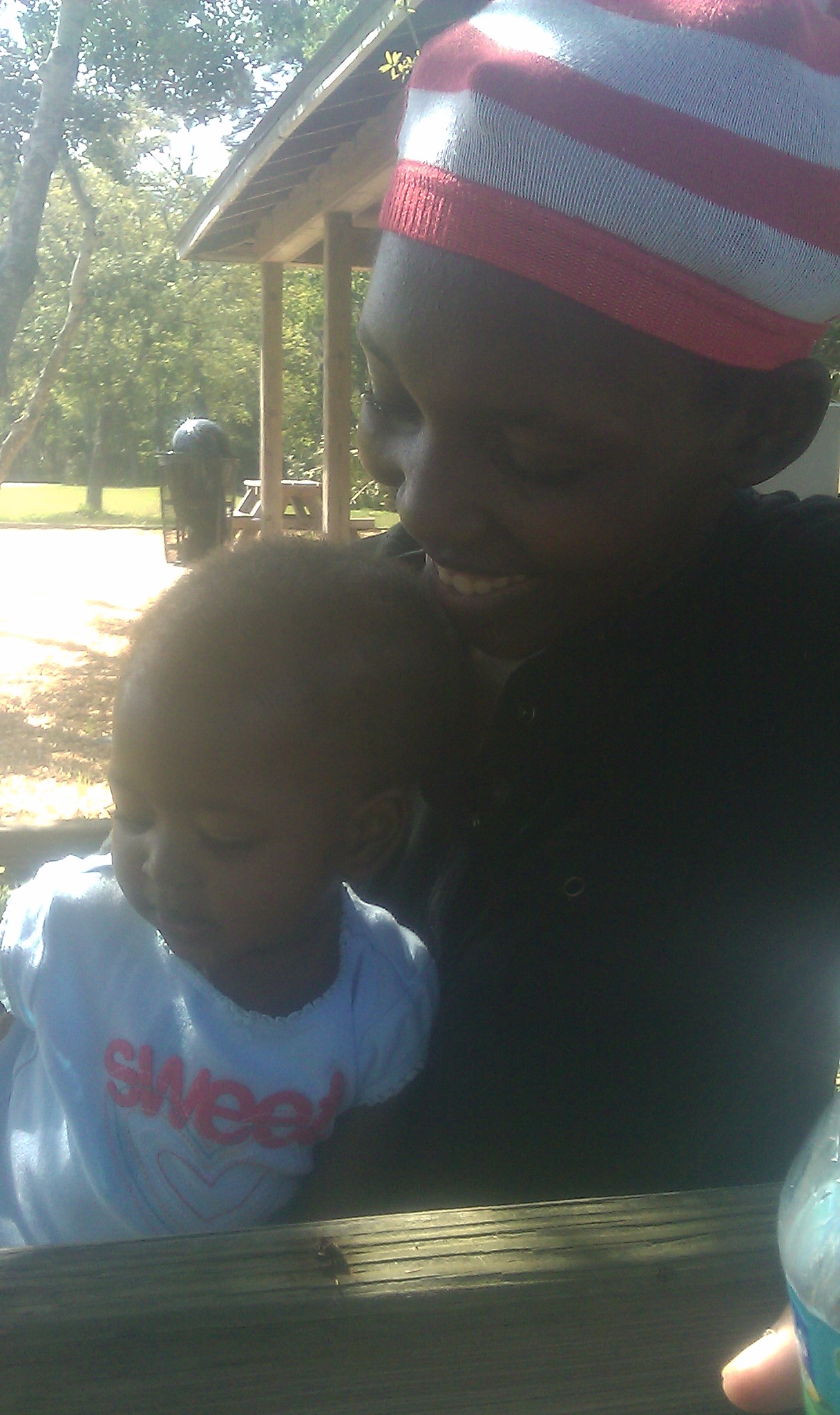 Most of all, it was Gertha’s and Ylionel’s devotion to their daughter, their determination to give her a chance to live, that made what seemed impossible a reality. Ylionise had surgery a few weeks ago and is recovering marvelously. She and her mother are almost ready to go home to Ylionel and Ylionise’s sister, Seralda, in Haiti. Someone asked, “what if,” and a lot of people came together to answer. And a child’s life is saved. And a family stays a family.
Shortly after we started working on Ylionise’s case, Partners in Health and a pediatrician in Haiti told us about another child, Junior, who, like Ylionise, needs help. Junior is a 12-year old boy who needs heart surgery for a condition he contracted by a fever when he was two. He will die soon, we have been told, if he does not get the kind of help Ylionise received. Generous as a child, Junior has told Jamie that he is glad such a small girl as Ylionise will no longer have to face death from a heart condition, as he does. He celebrates Ylionise’s new lease on life, and might be happy with his own fate knowing that she will survive. We would not be.
We don’t know how we can help Junior. But we know what will happen if we don’t.
–Jean Griffith, Executive Director