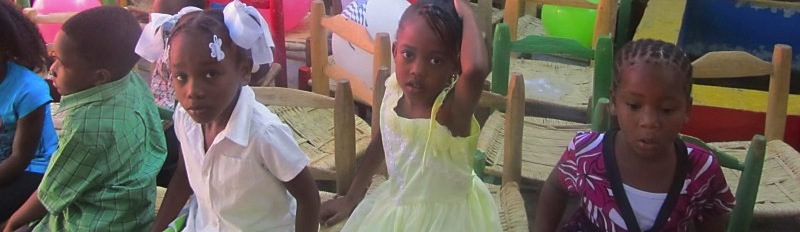
 By HFF Co-President Ali McMutrie
I was home-schooled from kindergarten through the 8th grade. I’ll let that sink in.
You’re probably having the reaction I get from most people when I say that: “No way, really?!” Yes, really. My mom was home-schooling my older brother and sister when I was of age to start kindergarten, so by default, I was home-schooled too. It was a new concept back then, in the early 90s, and kind of innovative. Okay, maybe it wasn’t viewed as innovative as it was really, really weird.
I didn’t know that I should have felt weird about being home-schooled until I was a little older, probably middle-school age. I had a wonderful social life, more friends than I could count, and I routinely passed assessment tests. It was clear that I was where I needed to be academically, and even excelling. But there was definitely a point when I said, “you know what? I want to go to school.” I ended up starting public school for the first time in 9th grade at Avonworth High School and graduated from there in 2006. I enjoyed high school very much overall, but there were definitely times (especially when my alarm was going off at 6 a.m.) that I thought to myself, “was this my idea?!” Home-schooling is much more flexible, to say the least.
I am reflecting on this today as my little brother started first grade last week, and everywhere you turn, there is “back to school” talk. It is a part of life for almost all American kids: the end of summer means back to school and includes back-to-school shopping, comparing class schedules with friends, etc. The ritual of going back to school is engrained in childhood here. It is never an “if” or a “maybe;” it’s a given.
That at 13, I had two different options of where I could go to school is incredible. My mom was able to be a stay-at-home mom at that time, and she was completely devoted to me and my education if I should choose homeschooling. The public school I ended up attending was a fantastic, small school with uniquely small class sizes and big opportunities.
While for American kids, there is no doubt that Fall means back to school, for kids in Haiti, it is not so simple. For the children in our program, the question isn’t “which schooling option do I want to choose” but rather: “Will I get to go to school this year? Will my family be able to afford the tuition (never free in Haiti)?” “And what about the uniform (required, but additional fee) and the books (again, required but additional fee)?” “Even if we can afford it, how will I get there (no transportation system)?” “I’ve had to skip grades when we didn’t have the money; how will I keep up?” “My parents didn’t go to school; will I be able to succeed there?”
In Haiti, sadly, it is the lack of school that creates another kind of ritual: poverty passed down from one generation to another rather than the opportunity we associate with our school rituals. I am so thankful for the opportunities that I had, and how every experience I had growing up shaped me into the person I am today. And I am so thankful that, through Haitian Families First, more children in Haiti have answers to those tough questions. More children have the chance to change a ritual of poverty to one of promise and hope because people like you are willing to support them and invest in their future.
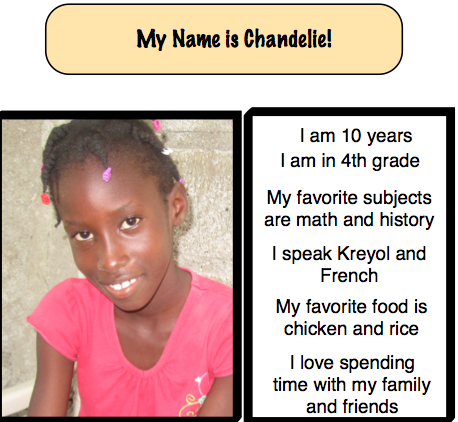
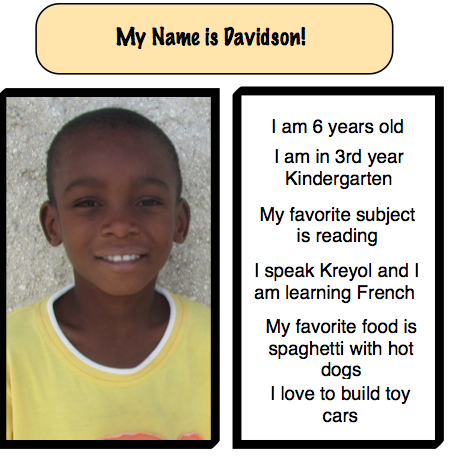
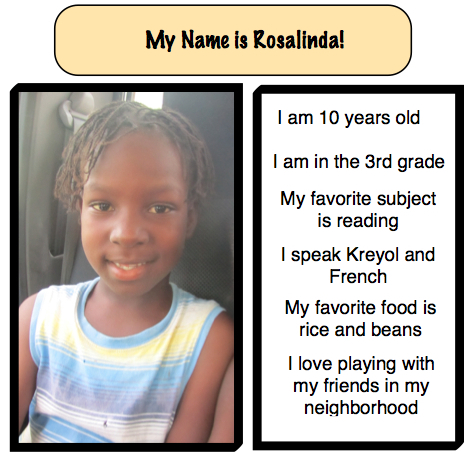
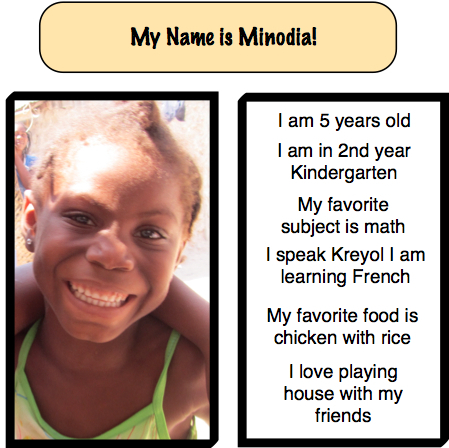
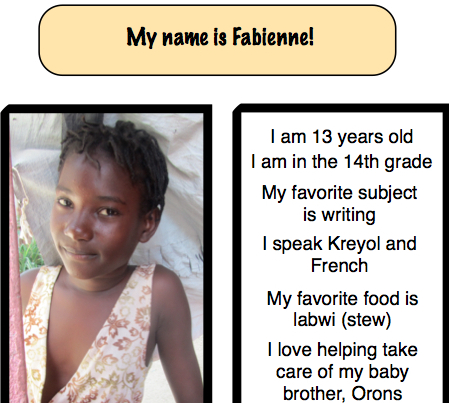
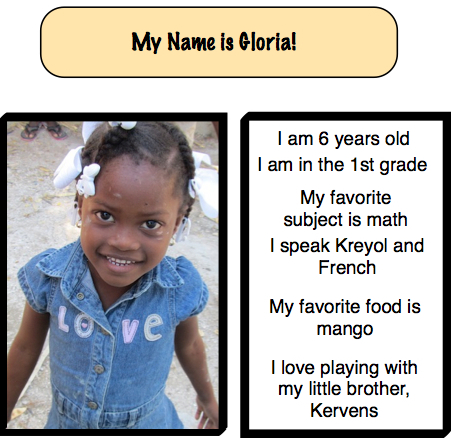
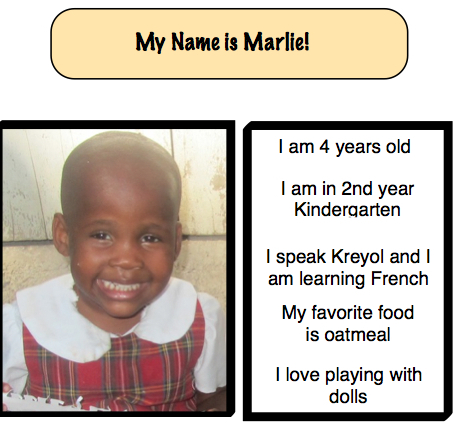
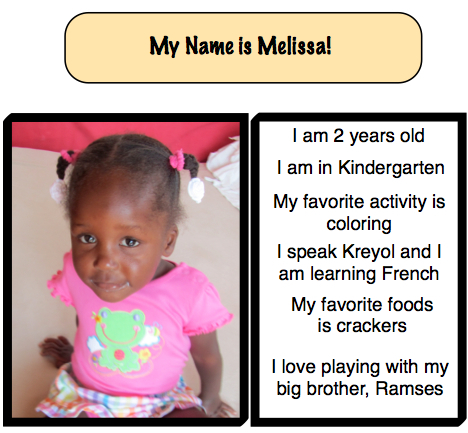
 We are currently trying to raise the funds for 46 children to enroll in school, which begins in October. Will you consider sponsoring one of those children for the 2012-2013 school year? A one-time donation of $180 will support one of our children this year, covering the cost of tuition, a uniform, books, and a snack. In turn, you’ll receive the benefits of our monthly education sponsorship program: artwork by your child and our sponsor newsletter.
As an American who’s been to Haiti a handful of times, I’ve often been asked by those who haven’t been there some variation of the question: “why is Haiti so poor?” But from Americans who have traveled there, I’ve often been on the receiving end of a comment: Haiti is a land of contrasts.
 Slavery and freedom. Very rich and very poor. Very light- or very dark-skinned. French; African. So close to the U.S., but so very different. So much despair, but so much pride. Squalor, beauty. Corruption; hope. Disaster; resiliency. History; promise.
I recently took my fifth trip to Haiti since I first travelled there in May of 2009 to meet the infant who, through adoption, became my son. On this trip, thanks to Jamie, HFF staff, and the many families that welcomed me into their homes, I had the opportunity to see more of the contrasts embedded in Haitian life–and to see something beyond them.
Take, for example, the two kinds of homes in which most of HFF’s families live. Many families reside in the kind of huts that have dotted Haiti’s landscape since before earthquake. Made of cinderblocks, usually with no electricity, no doors or windows, no bathroom, and no furniture except, perhaps, an old table and a cot or two, these small dwellings are often shared by many family members.
But we’ve heard so much more about tents since January 2010. I visited one HFF family that lives in a tent city and, oddly enough, though the walls were made of tarp rather than cinderblock, the tent was much hotter than the huts I visited. There were the same odds and ends lovingly cared for that I saw in many of the huts I had visited, and the same kind of old, wooden chair was brought out from its hiding place for me as a guest. The same graciousness and the same pride. But there wasn’t as much a sense that life went on outside that I saw in the huts. Tent cities are sprawling, crowded places where neighbors are friendly but tentative and families come and go. Huts are built in clusters that bring together a handful of families that are mutually dependent.
 Thanks in part to HFF’s help, the family I visited in the tent will soon own the land on which their temporary home now stands, and they’ll be able to work toward building a more permanent structure, which will probably be made of cinderblocks. Hopefully, some of their neighbors will be lucky enough to do the same. That visit reminded me how hard Haitians try to hold on to or rebuild their communities and families, and how important HFF’s work in helping them to do so is.
–Jean Griffith, Executive Director, Haitian Families First